
Cryptocurrency is a powerful and innovative financial technology that offers independence, global accessibility, and exciting investment opportunities nowadays. Whether you’re using it for trading, long-term holding, or digital transactions, understanding how to start properly and staying informed about security practices can help you enjoy the benefits while minimizing risks.
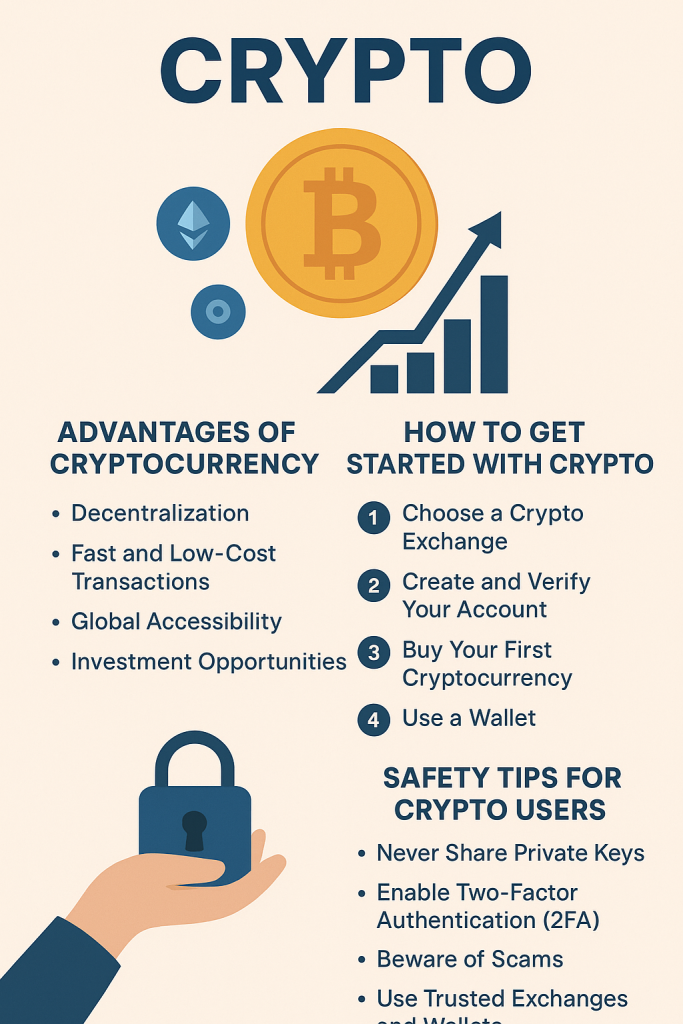
How to Get Started with Crypto
1. Choose a Crypto Exchange
Start by selecting a trusted trading platform. Popular exchanges offer buying, selling, storing, and transferring features in one place. Consider factors like fees, security, and ease of use.
2. Create and Verify Your Account
Most exchanges require identity verification for security and legal reasons. Once your account is approved, you can deposit money using a bank transfer, credit card, or supported payment option.
3. Buy Your First Cryptocurrency
Beginners often start with well-known coins like Bitcoin or Ethereum due to their stability, history, and market recognition. You can buy whole coins or fractions—meaning you don’t need large capital to start.
4. Use a Wallet
While exchanges offer built-in wallets, many users prefer external wallets for extra protection. Options include:
- Software wallets (mobile or desktop apps)
- Hardware wallets (physical devices offering offline security)
5. Learn How Transactions Work
Before moving funds, understand wallet addresses, network fees, and transaction confirmations. This helps prevent errors and protects your funds.
Safety Tips for Crypto Users
1. Never Share Private Keys
Your private key or recovery phrase is the master key to your wallet. Anyone who has it can steal your funds instantly. Keep it offline, secure, and never share it with anyone.
2. Enable Two-Factor Authentication (2FA)
Activate 2FA on your exchange accounts to prevent unauthorized logins, even if passwords are compromised.
3. Beware of Scams
Crypto scams are common. Avoid:
- Promises of guaranteed returns
- Fake airdrop or giveaway links
- Messages from “support agents” asking for login details
- Always verify websites and contact sources before responding.
4. Use Trusted Exchanges and Wallets
Stick to reputable platforms with strong security records. Research before signing up or installing anything.
5. Back Up Your Wallet
Write down your recovery phrase and store it securely. This ensures you can recover your funds if your device is lost, damaged, or stolen.